GET BV TREATMENT ONLINE
Chat with a doctor about bacterial vaginosis today.
Only $49 for your first month of membership.
• Medical providers available 24/7
• Same-day prescriptions
• No appointment or insurance needed
• Pay $49 for your first month of unlimited visits or $73 for one visit
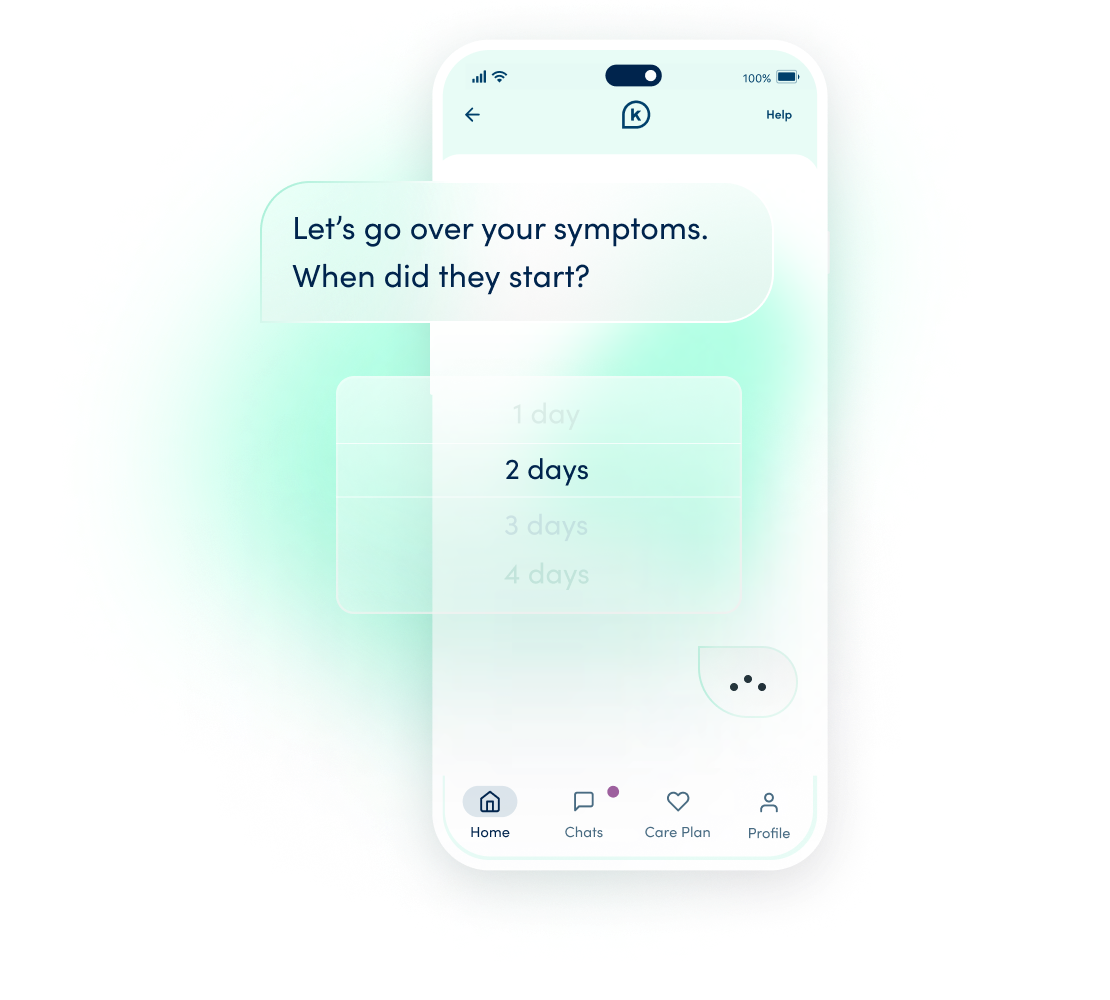
The benefits of getting treatment with K Health
Instant info
Our smart Symptom Checker brings together data from millions of People Like You to provide you with information–for free.
Care when you need it
Medical providers are available 24/7 via text—no appointment or insurance necessary.
Same-day relief
Get medication ASAP and get on with your day. If your symptoms don’t improve, we’re always a text away.
No wasted time
Get the treatment you need without changing your plans. You won’t miss waiting at an urgent care.
LEARN MORE
What is bacterial vaginosis (BV)?

The right balance of bacteria can help keep the vagina healthy. Bacterial vaginosis, also known as BV, is a vaginal infection that occurs when someone’s vagina has more “bad” bacteria than “good bacteria.”
This can happen for many reasons, whether due to a genetic predisposition or lifestyle practices like douching or having multiple sex partners. BV can happen to anyone with a vagina, but it’s more common in people of reproductive age.
If you suspect you may have bacterial vaginosis, it’s important to seek medical care. Untreated BV can result in uncomfortable symptoms and, in some people, cause medical risks.
What are the symptoms?
Bacterial vaginosis doesn’t always cause symptoms. When it does, BV can result in:
- Gray, white, or green vaginal discharge that may be thin, watery, or milky
- Fishy-smelling vaginal odor
- Foul smell that’s most noticeable after sex or during menstruation
- Itching in or around the vagina
- Pain in the vagina
- Burning while peeing
These symptoms can be uncomfortable and even painful. In some cases, bacterial vaginosis can cause other health problems.
For example, it’s thought that BV can make people more vulnerable to sexually transmitted infections, particularly HIV. It can also increase the risk of pelvic inflammatory disease if left untreated. In pregnant people, BV can result in preterm delivery or low birth weight.
If you think you may have bacterial vaginosis, consult with a healthcare provider who can recommend the best treatment option for you.
What are the causes?
Bacterial vaginosis happens due to an imbalance of bacteria in the vagina. Certain factors can increase a person’s risk for developing BV, such as:
- Douching: Washing your vagina with soap or vinegar, using scented bubble bath, or applying vaginal deodorant or scented wipes can result in an imbalance of bacteria and, eventually, bacterial vaginosis. Doctors don’t recommend scented vaginal care products, because the vagina typically keeps itself clean.
- Having sex with someone new: BV isn’t technically considered a sexually transmitted infection, but sex can increase your risk. It’s more likely to occur in someone who has more than one sex partners or has sex with someone new without using protection. It’s also more common in women who have sex with women.
- Sharing sex toys: If you use sex toys, be sure to thoroughly wash them before sharing them with a partner. Unhygienic practices with sex toys can increase the likelihood of a BV infection.
- Poor bathroom hygiene: Harmful bacteria from your digestive tract can infect your vagina. Always wipe from front to back after you go to the bathroom.
- Smoking: Tobacco use can alter the chemistry of your vaginal microbiome, resulting in a higher chance of developing BV. If you smoke, talk to your doctor about quitting ASAP to prevent bacterial vaginosis and many other serious health conditions.
- Pregnancy: The hormones of pregnancy can disrupt your vaginal bacteria and result in a higher chance of developing bacterial vaginosis. If you have BV while pregnant, seek medical care; harmful bacteria can increase the risk of preterm labor or low birth weight.
- Genetics: Some people simply don’t produce enough “good” bacteria. An imbalance of these microorganisms in your vagina can cause bacterial vaginosis.
Even if you don’t have these risk factors, it’s possible to have bacterial vaginosis. A doctor can help you understand your symptoms and how to properly treat them.
What are the treatment options for BV?
Sometimes, bacterial vaginosis goes away on its own. But most of the time, BV requires treatment. If you have BV symptoms and you’re sexually active or pregnant, speak to your medical provider right away. A doctor can diagnose you and recommend the best treatment option.
The best way to treat bacterial vaginosis is with antibiotics, a type of medication that helps with infection symptoms by stopping bacteria from growing. Most commonly, medical providers prescribe the following antibiotics for bacterial vaginosis:
- Clindamycin (Cleocin, Clindesse)
- Metronidazole (Flagyl, Metrogel-Vaginal
- Tinidazole (Tindamax)
- Secnidazole (Solosec)
These antibiotics may be prescribed as a cream or gel suppository (Clindamycin and Metronidazole) you apply directly inside your vagina with an applicator. Or, you can take antibiotics for bacterial vaginosis in pill form (Tinidazole and Secnidazole).
Usually, BV infections clear up with treatment within five to seven days. Until you stop your medication and your symptoms are resolved, it’s best to avoid sexual activity. It’s common for bacterial vaginosis to recur within a year, especially in sexually active people.
If you have a prescription for treating bacterial vaginosis, always follow your medical provider’s instructions. It’s important to finish the whole course of antibiotics, even if you feel better; stopping too soon can contribute to antibiotic resistance or cause the infection to come back.
How much does BV treatment cost?
How much BV treatment costs varies, depending on several factors, such as the type of medication and dosage strength. Whether you have insurance also plays a role in BV treatment cost.
If you have health insurance, it may partially or fully cover antibiotic treatment. Typically, generic medication is cheaper than brand-name drugs. If you’re concerned about price, speak to your prescriber about a generic option.
Whether or not you have health insurance, it may be more cost-effective to treat your bacterial vaginosis online. You can see an online doctor for diagnosis and treatment, then order your prescription at an online pharmacy, which delivers your medication to your home.
Can I treat BV online?
Treating bacterial vaginosis with antibiotics requires a prescription from a licensed medical professional. A K Health doctor can diagnose your BV based on your symptoms and medical history, then prescribe the medication that’s most likely to resolve your infection.
You can choose where you purchase your prescription, whether a storefront or an online pharmacy. Ordering BV treatment online and having it shipped directly to your home is one way to cut costs and access affordable treatment.
If you think you may have bacterial vaginosis, connect with a medical provider as soon as possible to learn about your treatment options that can resolve your symptoms and prevent future complications.

Stephanie Foley, MD

Neil Brown, MD

Heather Hylton, MS, PA-C

Lynn Byars, MD

David Morley, MD
See a medical provider you trust
-
Our licensed providers were trained at top-tier medical institutions
-
They use advanced health AI technology to provide you with personalized care
-
And they’re available 24/7, just a text away

Frequently asked questions
Do you provide doctor’s notes and sick notes?
During a visit, K Health-affiliated medical providers can only provide a note stating the date when they saw you and that care was provided.
Recommended content
All articles